Why Symbols Alone Do Not Control Luck
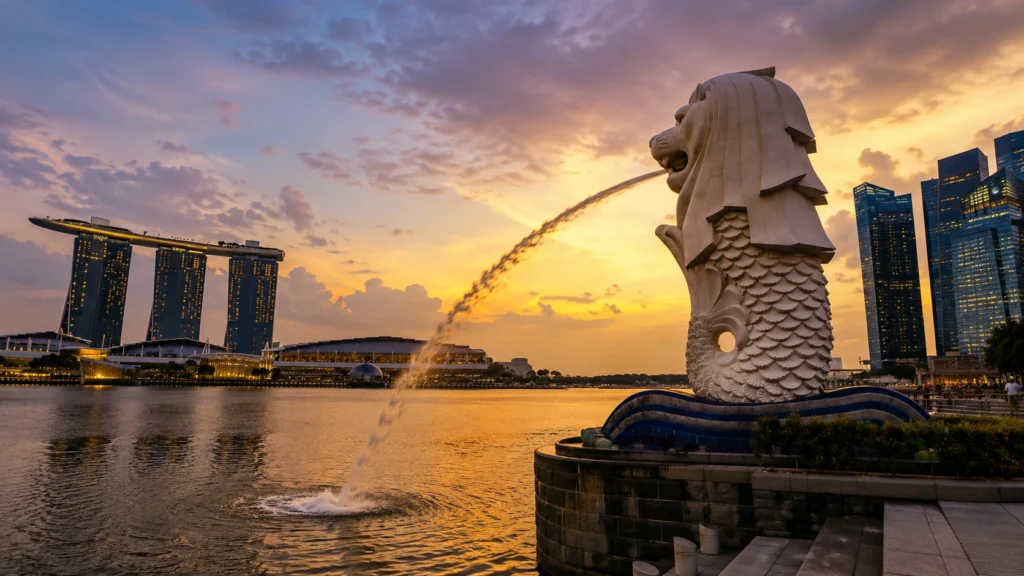
The Merlion is one of Singapore’s most well-known icons.
With the head of a lion and the body of a fish, it represents Singapore’s story — from a fishing village and seaport to a modern city known around the world. It is meaningful. It is familiar. It is part of our national image.
But from a Feng Shui point of view, we must be clear.
The Merlion has no real Feng Shui significance.
It is an icon. A symbol. A modern representation of Singapore’s identity. But it is not an ancient Feng Shui object, and it is not a sacred geomantic structure that controls the fate of the country.
This is where many people get confused.
When the Merlion was struck by lightning years ago, public reaction was divided. Some people saw it as a bad omen. Some said it was a warning sign. Others claimed it had helped to cleanse Singapore of bad luck. Geomancers debated the meaning, and different stories began to spread.
But in my opinion, all of this missed the point.
In Feng Shui, symbols do not run a country.
People do.
A statue being damaged does not change the destiny of a nation. A logo being struck by lightning does not suddenly affect the luck of millions of people. That would be giving too much power to the wrong thing.
It is like throwing away a name card and saying the whole company will collapse. That is not logic. That is fear.
This same mistake also happens in the way many people view Feng Shui objects.
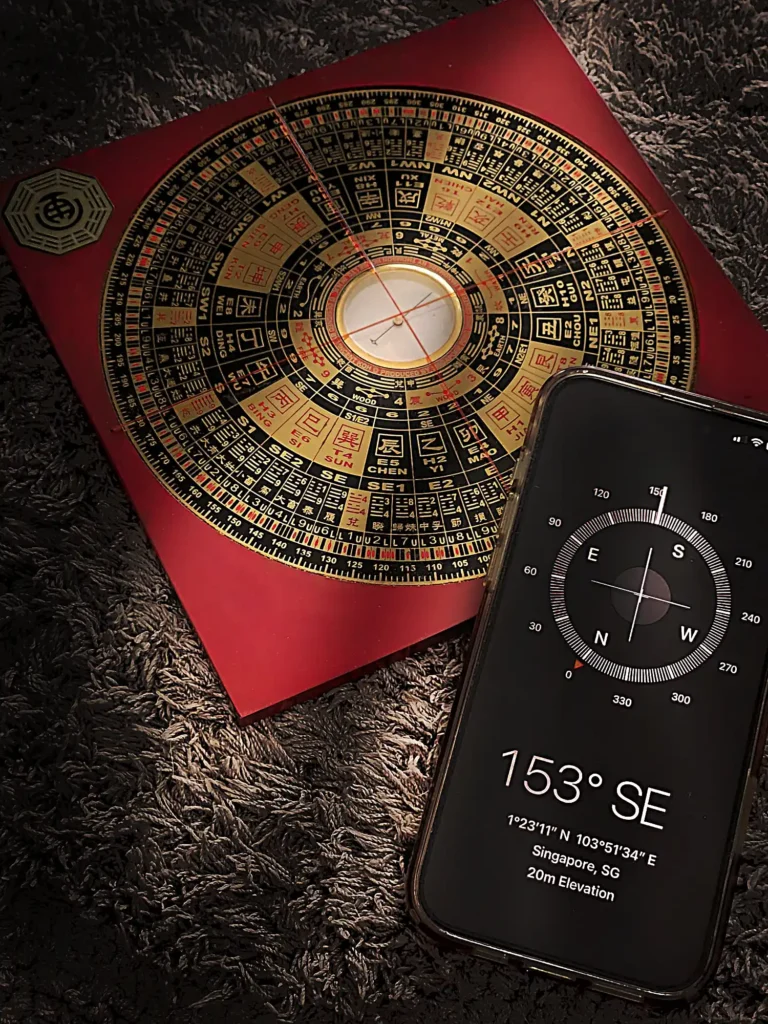
Over the years, many people have been told to place certain items for certain results. A pagoda for studies, a tiger or eagle painting for business power, a mountain artifact for Period 8 support, guardian lions for protection, or other symbolic objects believed to attract luck.
I am not saying these objects have no meaning.
A pagoda can represent learning. A tiger can represent strength and authority. An eagle can represent vision and ambition. A mountain can represent support and stability. Guardian lions can represent protection and presence.
But symbolism is not the same as Feng Shui.
An object does not automatically create wealth, improve studies, protect a business, or fix a weak property. If that were true, every student with a pagoda would become a scholar. Every office with an eagle painting would become successful. Every home with guardian lions would be safe from problems.
But real life does not work that way.
Real Feng Shui is not about buying an object and hoping life changes. It is about understanding the Qi of a place. It is about landform, direction, layout, timing, movement, and how people use the space.
An object may have a role, but only when it is placed with proper understanding.
A tiger painting in the wrong place may create pressure instead of power. An eagle painting may feel aggressive instead of inspiring. A mountain feature placed wrongly may block movement instead of giving support. Even guardian lions, when used without purpose, may become nothing more than expensive decoration at the entrance.
The object is not the main power.
The Qi is.
The placement is.
The timing is.
The suitability is.
That is why when people ask whether a certain Feng Shui item is “good,” my answer is usually: it depends.
Not because I am avoiding the question, but because Feng Shui cannot be judged by the object alone. The same item can help in one place, do nothing in another, and create problems somewhere else.
This is the difference between symbolic belief and real Feng Shui practice.
Symbolic belief focuses on the item.
Real Feng Shui studies the environment.
Symbolic belief says, “Place this and luck will come.”
Real Feng Shui asks, “Is this suitable for the Qi of this space?”
That is a very different standard.
The same applies to the Merlion. It may be meaningful as a national icon, but that does not mean it controls Singapore’s luck. It does not decide whether the economy grows, whether businesses succeed, or whether families prosper.
People do that.
Leadership does that.
Clear thinking does that.
Structure, action, and good decisions do that.
Feng Shui should not be reduced to fear. It should not make people panic over every crack, storm, accident, or strange event. Not everything is an omen. Not every damaged object carries a hidden warning.
Sometimes, a statue is just a statue.
Sometimes, lightning is just lightning.
And sometimes, the real problem is not the event itself, but the fear people attach to it.
Feng Shui is not about superstition. It is about understanding what truly affects people and places.
It helps us see where Qi gathers, where it leaks, where it supports, and where it works against us. It helps us make better decisions about property, layout, timing, and how we live.
That is very different from worshipping symbols.
Symbols can carry meaning.
They can remind us of values.
They can support intention.
But they cannot replace real Feng Shui.
Life goes on. Progress continues. People still work, build, lead, create, and make choices every day. That is where real fortune is shaped.
The Merlion may be an icon of Singapore.
But it is not the engine of Singapore’s destiny.
Clarity beats superstition every time.