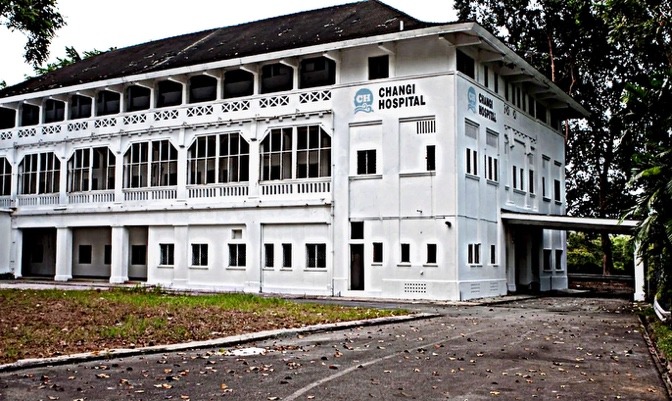
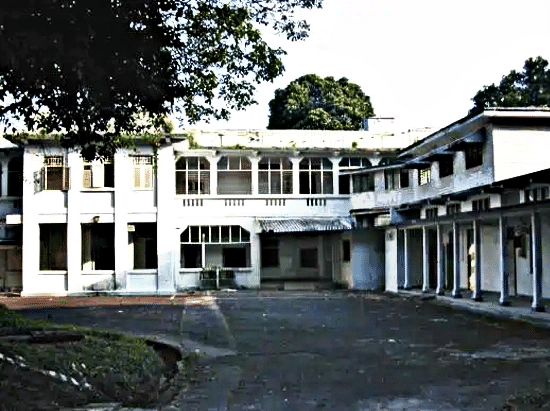
Old Changi Hospital is remembered today for its empty corridors, overgrown surroundings, and countless ghost stories. Yet the building did not begin as an abandoned hospital.
Its story began as part of a British military base.
Blocks 24 and 37 were constructed during the 1930s as part of Kitchener Barracks. The buildings were originally connected with military use before becoming the main blocks of the Royal Air Force Hospital.
During the Japanese Occupation from 1942 to 1945, the wider Changi military area was converted into a prisoner-of-war camp. Large numbers of prisoners suffered from dysentery and other diseases. The existing medical facilities could not cope, and hospital operations were moved temporarily to nearby Roberts Barracks.
Changi also became associated with wartime executions. However, we should distinguish documented history from later ghost stories. There is no reliable evidence that mass executions took place inside the hospital buildings themselves.
The confirmed execution site was nearby Changi Beach. On 20 February 1942, 66 Chinese male civilians were shot at the water’s edge during the Japanese Sook Ching operation.
Together with the prison, prisoner-of-war camps, military buildings, and nearby execution ground, the entire Changi area accumulated a painful history. This later became part of the background from which its many ghost stories developed.
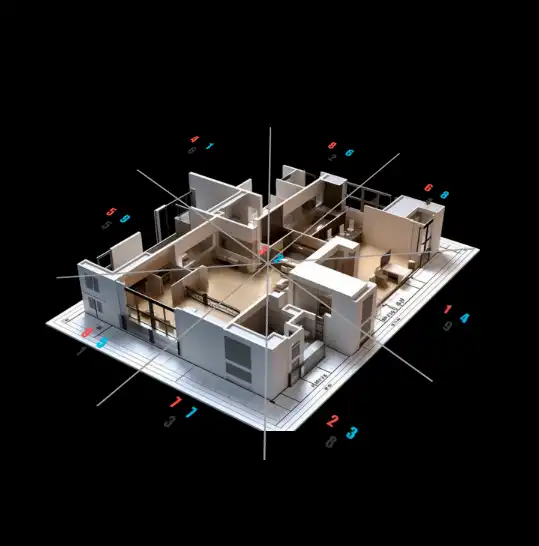
After the war, the hospital returned to Blocks 24 and 37 and expanded its services. In 1962, Block 161 was constructed between the two original buildings, linking them across the steep hill.
The hospital later passed through several administrations. It became the ANZUK Hospital, the UK Military Hospital, and then the SAF Hospital. In 1976, it merged with Changi Chalet Hospital to form Changi Hospital.
It continued operating until 1997, when its services were transferred to the new hospital in Simei.
The Sea Determines the Facing
Blocks 24 and 37 were both built during Period 4, which lasted from 1924 to 1943.
Before Block 161 was added, the two buildings stood separately on the same hill. Their entrances may have faced different directions, but the entrance does not automatically determine a building’s facing.
The entrance is a mouth through which people and Qi enter. The facing is determined by the side receiving the strongest external energy.
For the original Changi hospital buildings, that side was the sea.
Compared with the forest and rising land behind them, the sea provided the widest view, the greatest openness, and the strongest movement of Qi. Both buildings were exposed to the same dominant coastal formation.
It is therefore reasonable to treat the original development as sharing the same natural sea-facing orientation, even though their entrances were placed differently.
At this facing, the Period 4 chart contains:
- Mountain Star 3
- Water Star 5
- Base Star 9
However, this 3–5–9 combination did not produce the same result throughout the life of the hospital.
The stars remained in their original positions, but their timing changed.
This is the part that is often missing from a Flying Star analysis.
Period 4: Star 5 as Incoming Prosperity
When the original buildings were constructed, Star 4 was the ruling star of the period. Star 5 represented incoming prosperity because it was the next star preparing to take command.
Water Star 5 at the sea-facing sector was therefore not automatically negative.
The sea provided movement, openness, and Yang Qi — the correct environmental conditions for activating a Water Star. Since Star 5 was approaching its own period, this activation could support the growth and development of the site.
Mountain Star 3 belonged to Wood, while Water Star 5 belonged to Earth. Wood controls Earth, so there was still tension between the two stars. However, Star 5 was approaching timely status and was better able to handle this pressure.
Base Star 9 also supported Star 5 because Fire produces Earth. During this stage, the 9 feeding the incoming Star 5 could strengthen its favourable potential.
The combination was not necessarily gentle, but it had usable and productive Qi.
This teaches us that Star 5 should not be treated as permanently harmful. Its expression depends on timing, surroundings, and activation.
Period 5: Star 5 Becomes Timely
Period 5 lasted from 1944 to 1963. Star 5 became the ruling and timely star.
The sea activated Water Star 5, while Base Star 9 continued feeding it. After the war, the RAF hospital returned to Blocks 24 and 37, expanded its services, and developed a reputation as a modern military hospital. Block 161 was added in 1962, near the end of Period 5.
The hospital’s growth does not prove that Star 5 caused its success. It does, however, illustrate the principle: when a timely star receives suitable environmental support and purposeful human activity, its favourable qualities become more usable.
During Period 5, Star 5 was timely and commanding. The sea gave it movement, Base Star 9 gave it support, and the hospital gave it a useful purpose.
Period 6: Star 5 Becomes Untimely
Period 6 began in 1964. Star 5 was no longer the ruling star. In the framework used here, its favourable life had ended and it entered dead or untimely Qi.
The natal chart did not change. Water Star 5 remained at the sea-facing sector, with Mountain Star 3 and Base Star 9 beside it. What changed was the quality of Star 5.
The sea continued to activate Water Star 5. Base Star 9 continued producing Earth and strengthening it. Mountain Star 3 continued controlling it. However, these influences were now acting upon an untimely star.
The combination could therefore express itself differently:
- Star 3 aggravated the untimely Star 5.
- Base Star 9 continued to feed Star 5.
- The sea continued to activate Star 5.
- The working hospital supplied constant human activity.
Star 5 was now untimely, while the active hospital and open sea kept it strongly engaged. The same activation that had been useful during Period 5 could now be associated with greater instability, obstacles, and disruption.
During Period 6, the hospital also passed through several administrations: from the RAF to ANZUK, then to the UK military, the SAF, and finally the Ministry of Health. These historical changes do not prove a direct effect from the chart, but they form part of the property’s transition after Star 5 lost its timely status.
Period 7: Activity Fades and the Hospital Falls Silent
Period 7 began in 1984. Although the hospital officially remained open until 1997, its business was poor and much of the property was already quiet and underused. It was almost empty for much of this period.
The buildings stood on a steep hill and were difficult to access. Their layout had evolved from military buildings rather than from a modern hospital plan. By 1988, the authorities were already looking for a more suitable location.
The decline in Yang activity was therefore gradual. The sea continued activating Water Star 5, but fewer patients, visitors, and daily activities meant that fewer people were exposed to its influence. When the hospital finally closed in 1997, almost all human interaction with the building ended.
Star 5 did not disappear or become favourable again. It remained untimely within the natal chart, but an empty building provided few human affairs through which its effects could be observed.
At the same time, the fading human presence removed the Yang energy that had once balanced the surrounding landscape.
The hospital already stood among thick forest, mature trees, shaded slopes, and quiet roads. After its closure, vegetation grew heavier, the corridors became dark and silent, and the buildings gradually deteriorated. The environment became increasingly Yin.
This is when the ghost stories became more prominent.
The hospital was not the only building in Changi associated with such stories. The nearby chalets developed their own accounts of unusual sightings, sounds, and experiences. This suggests that the reputation came not from one Flying Star combination alone, but from the wider landscape: its wartime history, nearby execution site, former prison camps, old military buildings, dense forest, and loss of regular human activity.
Feng Shui cannot prove the presence of ghosts. It can, however, explain why the area feels unusually Yin and why people may become more sensitive to sounds, shadows, and movement.
The history created the memory. The forest created the stillness. Abandonment removed the Yang.
Together, they created an atmosphere in which ghost stories could easily grow.
The Same Star Through Different Periods
Old Changi Hospital shows why a Flying Star cannot be judged by its number alone.
- In Period 4, Star 5 represented incoming prosperity.
- In Period 5, it became timely and commanding.
- In Period 6, it became untimely but remained strongly activated.
- In Period 7, Star 5 remained untimely, but poor business and low occupancy reduced the number of people exposed to it.
The chart remained the same. What changed was the timing of the stars and the way the buildings were used.
When Star 5 was timely, the open sea facing supported activity and growth. Once it became untimely, the same sea continued activating a star whose expression had changed. During Period 7, poor business and low occupancy meant that fewer people were present to experience its effects. Yet the same loss of activity also removed the Yang presence that had balanced the forest, allowing the Yin landscape to dominate.
The transformation was gradual:
- A military barracks became a hospital.
- An incoming star became timely, then untimely.
- A busy hospital became underused, then empty.
- And a place once filled with people became better known for its ghosts.
The lesson is simple: a star’s number tells us its nature, but timing tells us whether that nature is usable. The surroundings determine whether the star is activated, while the purpose and use of the space determine how people experience it.
A star may remain fixed in the chart, but its story changes as the building moves through time.